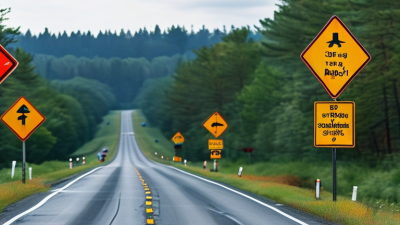
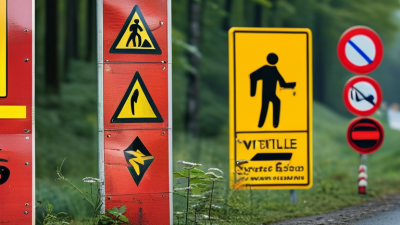
Choosing the best road signs manufacturers in China requires more than comparing prices or browsing polished product catalogs. Quality appears in the details: clean reflective sheeting, sharp borders, stable aluminum panels, accurate color, and secure mounting holes. A sign may look excellent under daylight but fail to remain readable when headlights strike it at night. That difference matters.
Gene Hawkins, a respected traffic-sign researcher, has emphasized that a sign must be “seen, understood, and followed.” This simple principle should guide every manufacturer comparison. Strong suppliers usually demonstrate practical experience with road signs, export packaging, weather-resistant materials, and consistent production controls. They should also explain their testing methods instead of making broad promises. Ask for samples. Inspect the edges. Check the reflective performance.
No ranking is perfect.
This guide considers manufacturing capability, material quality, customization, delivery reliability, and communication. It also recognizes an important limitation: factory claims may not reflect long-term field performance. A supplier can provide impressive samples yet struggle with large orders or complex specifications. That is why independent documentation, project references, and clear technical drawings deserve attention.
China has many capable road signs manufacturers, but their strengths differ. Some focus on traffic signs for highways. Others produce warning signs, construction panels, parking signs, or complete sign systems. The best choice depends on road conditions, visibility requirements, installation methods, and project scale. Careful evaluation can reduce costly replacements and improve road-user understanding. Small details matter.
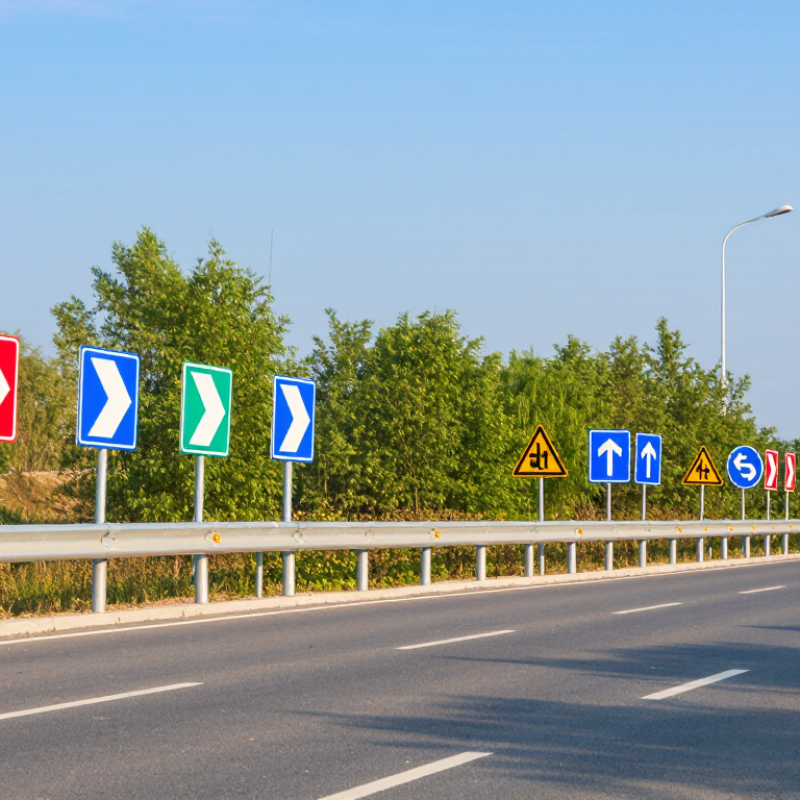
Road signs are standardized visual messages that guide, warn, restrict, or regulate road users. Their purpose is simple: deliver the right instruction before a driver reaches a decision point. The World Health Organization reported about 1.19 million annual road deaths worldwide in its Global Status Report on Road Safety 2023. Clear signs cannot prevent every crash, but they reduce hesitation and improve recognition.
In China, GB 5768 classifies road signs into warning, prohibition, mandatory, guide, tourist, and auxiliary categories. Warning signs often use triangular shapes and strong contrast. Prohibition signs commonly use circular forms with red borders. Guide signs provide destinations, routes, lanes, and distance information. This structure broadly matches the regulatory, warning, and guide groups described in the U.S. Manual on Uniform Traffic Control Devices. The details are not perfectly identical.
Manufacturers should treat classification as a production control, not a design preference. A warning sign near a sharp curve needs quick recognition, reflective performance, and stable color under rain. A guide sign requires legible lettering, accurate spacing, and sufficient viewing distance. The International Road Assessment Programme links safer road infrastructure with reduced crash risk, although sign quality alone is never enough. Field inspections sometimes reveal a practical weakness: a compliant sign may still perform poorly when dust, glare, or dense roadside advertising blocks it. That gap deserves more attention.
China’s road sign manufacturing industry is not a single factory process; it is a coordinated, project-based supply chain. The Ministry of Transport’s 2023 Statistical Bulletin recorded about 5.44 million kilometers of roads and 183,600 kilometers of expressways in China. That scale supports large production capacity, but quality still depends on process control.
Aluminum sheets are cut, cleaned, and shaped before printing. Workers apply reflective sheeting, then add symbols through screen printing, digital printing, or overlay films. Retroreflective performance is checked with photometric equipment, especially for night visibility. Finished signs may undergo adhesion, color, weathering, and salt-spray tests. The GB 5768 series provides China’s main technical framework for road traffic signs. Reliable manufacturers also keep batch codes, material certificates, and inspection records. These details make defects easier to trace. No factory gets every detail right.
The best manufacturer is not always the largest one. Buyers should compare test reports, production samples, quality staff, and delivery records. The China Highway Yearbook 2024 also shows the continuing expansion of China’s highway network, increasing demand for durable signs. However, reported capacity can be less meaningful than verified output.
Tips: Request a current compliance report and raw-material certificates. Inspect a sign under headlights, not only in daylight. Consider ultraviolet exposure, coastal salt, freezing temperatures, and cleaning chemicals. A common weakness is trusting a bright sample without checking long-term performance.
Choosing the best road sign manufacturer in China requires more than comparing prices. Evaluate experience with public infrastructure projects, production capacity, and quality control records. Reliable manufacturers should explain their materials clearly, including aluminum grades, reflective sheeting, coatings, and mounting hardware. Their signs should remain readable under headlights, rain, dust, and strong sunlight.
Ask for test reports, sample signs, and documented inspection procedures. Check whether the factory measures color, reflectivity, dimensions, coating thickness, and adhesion during production. Clear technical drawings reduce mistakes, especially for multilingual signs or custom shapes. A professional supplier should also provide stable lead times, secure packaging, and practical installation guidance. Factory visits or independent inspections can reveal details that brochures often miss. No factory is flawless. The important question is how quickly it identifies and corrects problems.
Tips: Request samples before ordering in volume. Compare samples under daylight and vehicle headlights. Confirm the sign’s expected service environment. Review previous project references, but verify them independently. Avoid choosing only by the lowest quotation; cheaper metal or weaker reflective material may create replacement costs later. I would also ask how complaints are recorded and resolved. That answer often shows whether the manufacturer values long-term reliability.
China has several notable road sign manufacturers serving highways, urban streets, industrial parks, and private developments. The strongest suppliers usually combine reflective sheeting, aluminum processing, digital printing, and precise cutting in one facility. This reduces production delays and improves consistency.
Experienced buyers often examine more than catalog images. They request material samples, check edge finishing, and compare color performance under headlights. Reliable manufacturers can explain retroreflectivity, corrosion resistance, mounting systems, and local traffic requirements clearly. Some also provide custom warning signs, direction boards, temporary work-zone signs, and large overhead panels. Factory experience matters, but it does not guarantee perfect results. A rushed inspection can still miss weak welds or uneven printing.
Tips: Ask for recent project photos and sample panels. Confirm aluminum thickness, reflective grade, printing method, packaging, and replacement procedures. Visit the factory when practical. Check measurements twice. A small size error may create installation problems later. It is also wise to clarify whether testing reports come from an independent laboratory. Some documentation looks impressive but lacks useful detail. Choose a manufacturer that communicates promptly, records specifications carefully, and accepts reasonable quality checks before shipment.
| Manufacturer Capability Profile | Typical Products | Common Materials and Processes | Typical Applications | Useful Procurement Checks |
|---|---|---|---|---|
| Reflective sign panel production | Regulatory, warning, guide, and temporary traffic signs | Aluminum or galvanized steel panels; reflective sheeting; printed or applied graphics | Urban roads, highways, parking areas, and construction zones | Check panel dimensions, edge finishing, graphic durability, and test documentation for the specified sheeting |
| Sign support and structure fabrication | Posts, brackets, frames, gantries, and sign supports | Steel or aluminum components; cutting, welding, drilling, and protective finishing | Roadside installations and overhead sign systems | Confirm drawings, material specifications, corrosion protection, structural calculations, and installation requirements |
| Variable message sign systems | Electronic traffic information and lane-control signs | LED display modules, control electronics, enclosures, and mounting structures | Expressways, tunnels, bridges, and traffic-management networks | Review display visibility, environmental protection, control interfaces, maintenance access, and system test records |
| Temporary traffic sign production | Portable signs, work-zone signs, and delineation devices | Reflective panels, lightweight supports, folding frames, and portable bases | Roadworks, event traffic control, and temporary diversions | Check portability, stability, visibility, weather resistance, and suitability for the intended traffic-control plan |
| Custom and project-based sign manufacturing | Special-format signs, coordinated sign sets, and project-specific assemblies | Specified substrates, reflective materials, supports, and fabrication methods | Municipal projects, transport infrastructure, and site-specific traffic layouts | Request approved drawings, material samples, production tolerances, inspection plans, and delivery documentation |
| This table compares common road-sign manufacturing capability profiles rather than ranking or identifying individual companies. For China projects, confirm the current applicable GB 5768 series requirements and relevant reflective sheeting specifications, including GB/T 18833 where applicable, against the project documents. | ||||
What Are the Best Road Sign Manufacturers in China?
Choosing a road sign manufacturer starts with project requirements, not a low quotation. China’s GB 5768.2-2022 standard addresses traffic sign design and technical applications. Your supplier should understand these requirements and your local road authority’s specifications. Ask for material certificates, production records, and recent test reports. Ask for proof. A professional manufacturer should explain aluminum thickness, reflective sheeting, coating methods, and expected service life in clear language.
The World Health Organization reported 1.19 million annual road deaths in its Global Status Report on Road Safety 2023. Sign visibility is not a decorative detail. Request nighttime reflectivity data, weathering results, and color-retention evidence. Inspect a physical sample under headlights. Check its edges, mounting holes, surface finish, and printed symbols. Digital images can hide defects. Samples cannot. Confirm whether testing covers rain, ultraviolet exposure, temperature changes, and corrosion.
Production capacity also needs careful checking. Review factory equipment, quality-control procedures, packaging, and delivery records. A supplier may promise 30-day delivery, yet raw-material shortages can change the schedule. Include inspection points before mass production. Independent testing is useful for high-risk projects. No checklist is perfect. I would still compare at least three quotations, because the cheapest option may use thinner materials or weaker reflectivity. A reliable manufacturer should accept reasonable audits and provide corrective-action records when something fails.
How this helps with manufacturer selection: A growing road network increases the need for signs that meet project specifications and can be supplied consistently. When evaluating manufacturers, verify applicable standards, retroreflective sheeting performance, production capacity, quality-control documents, and delivery schedules. Network mileage is context—not a ranking of manufacturers.
Source: China Ministry of Transport annual statistical bulletins. Expressway mileage is shown in kilometres.