How to Choose the Right Traffic Signs for Any Project?
Choosing the right traffic signs is not a decoration exercise. It is a safety decision shaped by road speed, user behavior, visibility, and local standards.
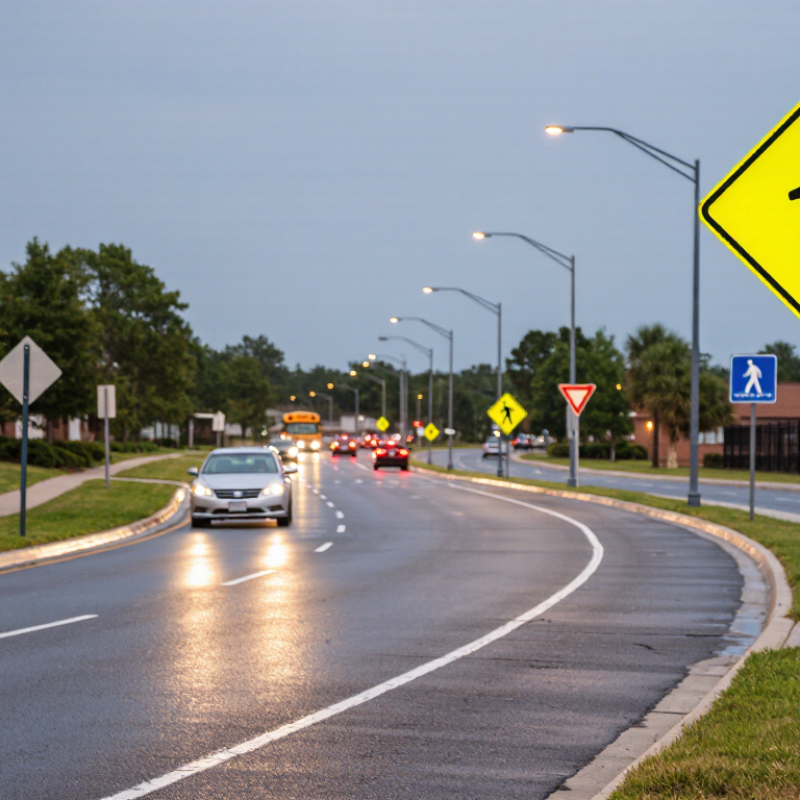
The World Health Organization’s Global Status Report on Road Safety 2023 estimates 1.19 million annual road deaths worldwide. It also reports that 20 to 50 million people suffer non-fatal injuries. These figures give sign selection a clear purpose: communicate hazards before people face them. A warning sign near a sharp bend should be visible through rain, glare, darkness, and roadside clutter. A pedestrian sign beside a school needs different placement and emphasis than one on a rural highway.
Reliable decisions begin with evidence. The Federal Highway Administration’s Manual on Uniform Traffic Control Devices, 11th Edition, published in 2023, explains sign design, application, placement, and maintenance within the United States. Other projects may require national or regional standards, such as European road-sign requirements or municipal accessibility rules. The correct choice is never based on color alone. Retroreflectivity, viewing distance, mounting height, sign size, and message simplicity all matter.
Keep the message brief.
In practical reviews, installers often discover problems after delivery. A sign may meet a catalog specification yet become unreadable behind tree branches or vehicle headlights. That gap deserves attention. This guide examines how to match traffic signs with road conditions, project goals, users, and maintenance plans. It also questions convenient assumptions, because a technically compliant sign can still communicate poorly in the real world.
Classify the Roadway and Sign Function Under the MUTCD 11th Edition
How to Choose the Right Traffic Signs for Any Project?
Classify the Roadway and Sign Function Under the MUTCD 11th Edition
Choosing a traffic sign starts with the roadway, not the sign catalog. Under the MUTCD 11th Edition, identify whether the facility is a freeway, expressway, or conventional road. Review access control, operating speed, lane arrangement, and nearby land uses. A quiet rural route needs different visual information than a multilane urban corridor.
Then define the sign’s function. Regulatory signs control movement, parking, speed, or access. Warning signs alert drivers to conditions that may require slower or safer operation. Guide signs provide route, destination, or service information. This distinction prevents a warning sign from carrying a regulatory message. It also supports consistent expectations for drivers.
Look closely at the field. A sign may meet a standard drawing and still fail in practice. Check sight distance, nighttime contrast, mounting height, lateral offset, and clutter from trees or utility poles. Measure the approach speed instead of relying only on a posted value. Small details matter.
A clean sign plan is not always a complete one. Temporary construction conditions, bicycle movements, pedestrians, and seasonal visibility can change the decision. I would document each sign’s purpose, location, and supporting condition. That record makes review easier and exposes weak assumptions. Even experienced teams miss signs hidden behind a curve. Recheck the approach from the driver’s eye level.
Select ASTM D4956 Sheeting: Types III, IV, VIII, or XI
How to Choose the Right Traffic Signs for Any Project?
Choosing ASTM D4956 sheeting begins with the road, not the product brochure. Type III is often suitable for ordinary roadside signs with moderate traffic and controlled viewing angles. It can provide dependable nighttime visibility at a practical cost. Type IV uses prismatic optics and may perform better where drivers approach from wider angles. Check the sign’s mounting height, curve, lighting, and expected service life before deciding.
Types VIII and XI deserve closer attention on faster roads, complex intersections, and locations with frequent nighttime travel. Their optical designs can improve brightness and angular performance, especially when headlights strike the sign indirectly. However, higher classification does not automatically solve every visibility problem. Dirty surfaces, poor installation, glare, and blocked sightlines can reduce real-world performance. A field inspection matters more than a quick catalog comparison.
Review the current ASTM D4956 documentation, coefficient-of-retroreflection data, color requirements, and warranty conditions. Confirm that the sheeting matches the sign face, substrate, edge treatment, and local specifications. A recurring mistake is choosing Type XI everywhere because it sounds superior. That approach may waste budget without improving safety. In practice, Type III or IV can be enough for some roads, while VIII or XI may be justified elsewhere. I would still measure the site at night; daylight judgment can be misleading.
Verify Mounting Height and Lateral Clearance Against MUTCD Standards
How to Choose the Right Traffic Signs for Any Project?
Correct sign selection begins with placement, not appearance. Verify the mounting height and lateral clearance against the current MUTCD edition, state supplement, and project drawings. Roadside signs often require a measured distance from the pavement edge, shoulder, curb, or sidewalk. The correct height can change in urban areas, rural corridors, bike routes, and locations with pedestrian access. A sign near a sidewalk may need extra clearance for people, wheelchairs, and maintenance equipment. Check the applicable MUTCD table carefully. Do not rely on memory.
On site, measure from the finished grade to the sign’s lowest edge. Confirm the post remains vertical after grading, paving, and landscaping are complete. Then measure lateral clearance from the nearest road feature, not from an assumed centerline. Watch for drainage channels, guardrails, utility cabinets, and snow storage. These details can reduce usable space. A tape measure helps, but it cannot explain every unusual condition. This is where field judgment matters. I have seen otherwise neat installations fail because final ground elevation was never checked.
Tips: Photograph each measurement. Record the surface, sign type, and installation date. Recheck clearances after sidewalks and curbs are finished. When conditions conflict, pause installation and request a qualified traffic-engineering review. Small errors become expensive corrections.
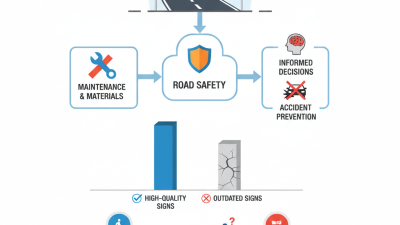
MUTCD Sign Placement Baselines
Minimum mounting height and typical lateral clearance values for selecting roadside sign locations.
Values are shown in feet and represent common MUTCD baseline requirements: 5 ft minimum bottom height for rural roadside signs, 7 ft for urban or sidewalk installations, 17 ft for overhead signs, 6 ft lateral clearance in rural areas, and 2 ft in typical urban areas. Confirm the current MUTCD edition and applicable state or local requirements before installation.
Plan Inspection and Replacement Using FHWA Retroreflectivity Guidance
How to Choose the Right Traffic Signs for Any Project?
Plan Inspection and Replacement Using FHWA Retroreflectivity Guidance
Choosing a traffic sign starts with nighttime visibility, not appearance at noon. The Federal Highway Administration recommends maintaining retroreflectivity through inspection, measurement, expected sign life, blanket replacement, or control signs. Each method has limits. Visual inspection is practical, but aging drivers may notice fading earlier than inspectors do. A sign can look acceptable in daylight and still perform poorly in rain.
NHTSA’s Traffic Safety Facts 2022 reported that 76% of pedestrian fatalities occurred in dark conditions. That figure makes retroreflectivity a safety decision, not a cosmetic upgrade. During field reviews, inspect signs from the driver’s approach distance. Check missing corners, peeling faces, blocked legends, and glare from headlights. Record sign color, installation date, orientation, and nearby lighting. The current MUTCD provides maintained retroreflectivity criteria that vary by sign color and application. Do not apply one threshold to every sign.
I have found replacement schedules useful, but they can create false confidence. Local heat, dust, snow, and cleaning practices change sign life. FHWA guidance supports combining scheduled reviews with nighttime observations and measured readings. Keep questionable signs on a short review cycle. A simple spreadsheet may be enough, though incomplete records remain a weakness.
Cite: FHWA, Maintaining Traffic Sign Retroreflectivity; MUTCD, 11th Edition, 2023; NHTSA, Traffic Safety Facts 2022.
.png)