Top Crosswalk Sign Types for Global Buyers

For global buyers, choosing a crosswalk sign involves more than comparing colors and prices. Road environments, driver expectations, weather, and local standards can change the best option. A sign that performs well on a bright urban street may become unclear beside a wet rural highway. That difference matters.

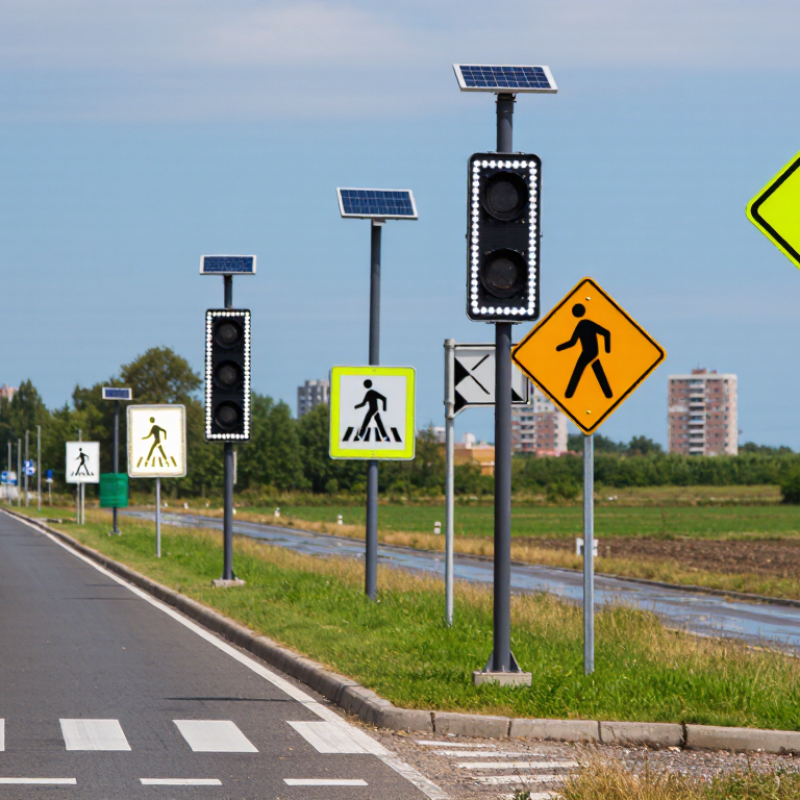
This guide examines major crosswalk sign types used across international markets. It considers fluorescent yellow-green signs, traditional warning signs, LED-enhanced models, solar-powered units, and internally illuminated designs. Each type offers practical strengths. Each also has limits. Fluorescent sheeting can improve daytime visibility, while high-quality retroreflective materials support recognition at night. LED systems may attract attention near schools, but they require dependable power, maintenance, and weather protection. Small details count. Mounting height matters. Viewing distance matters. So does the sign’s contrast against trees, buildings, or heavy traffic.

Reliable sourcing requires more than a product photograph. Buyers should request material specifications, reflectivity data, durability testing, installation guidance, and sample units. Ask about UV exposure, rain resistance, cleaning needs, and replacement parts. Certifications can support confidence, but they should match the destination market’s requirements. Local transport authorities and qualified traffic engineers remain important references.

There is no universal winner. That assumption can fail.

The right choice balances visibility, compliance, lifecycle cost, and local road behavior. This overview helps distributors, contractors, and public-sector buyers compare options carefully. It also highlights common purchasing oversights, because even experienced teams can miss them. Practical performance should lead the decision, not appearance alone.
Top Crosswalk Sign Types for Global Buyers

Crosswalk Sign Types Used in Different Countries

Top Crosswalk Sign Types for Global Buyers

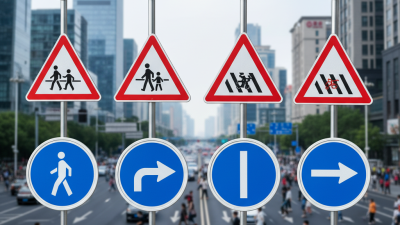
Crosswalk signs vary by road culture, visibility rules, and driver expectations. The United States commonly uses a fluorescent yellow-green pedestrian warning sign under the 11th Manual on Uniform Traffic Control Devices. The United Kingdom often relies on zebra markings, beacon posts, and controlled-crossing signals under TSRGD. Australia generally uses yellow diamond warning signs, while Japan commonly uses blue square pedestrian crossing signs. These differences matter during international sourcing.

The World Health Organization’s Global Status Report on Road Safety 2023 records about 1.19 million annual road deaths worldwide. Clear pedestrian communication remains essential. Buyers should check sign color, symbol shape, mounting height, retroreflective performance, and language requirements. A familiar symbol can still fail when installed at the wrong angle or beside visual clutter. That is easy to overlook.

Tips: Request test data for nighttime visibility, weather resistance, and color stability. Compare the sign with local road authority specifications, not only a supplier drawing. Confirm whether fluorescent sheeting is mandatory or optional. Do not assume one design suits every market.

For European projects, buyers should review national rules aligned with Vienna Convention principles, then verify local deviations. In North America, pedestrian-warning signs may require supplemental plaques near complex crossings. In Australia, school-zone crossings can use additional warning treatments. The best choice is often a compliant system, not the brightest sign. I have seen procurement teams overvalue appearance and undervalue installation consistency. That decision deserves another review.

Key Design Features of International Crosswalk Signs

Top Crosswalk Sign Types for Global Buyers

International crosswalk signs need more than a recognizable pedestrian symbol. The key design feature is fast visual understanding. A bold figure, strong contrast, and a clean border help drivers notice the sign at a distance. Retroreflective sheeting should return light clearly at night. It must also remain visible during rain, dust, and strong sunlight. In field inspections, uneven color fading often reveals weak materials before serious damage appears.

Shape and mounting height affect practical performance. A rectangular sign may provide more space for directional information, while a square sign can look clearer in crowded streets. The symbol should remain simple, with enough surrounding space to avoid visual confusion. Aluminum or treated steel supports can improve outdoor durability. However, heavier construction is not always better. Poorly matched brackets may create vibration, noise, or difficult maintenance.

Tips: Check the sign from a driver’s approach, not only from a catalog image. Compare daytime contrast with nighttime reflectivity. Confirm local size, color, language, and placement requirements before ordering. Small details matter, but buyers can still miss them. Ask for weathering data, visibility tests, and installation guidance. A design that works well in one climate may perform poorly beside a coastal road or under heavy snow.

Materials, Visibility, and Durability Requirements

Top Crosswalk Sign Types for Global Buyers

Crosswalk signs must remain visible through rain, dust, glare, and nighttime traffic. Fluorescent yellow-green faces attract attention near schools, intersections, and busy urban roads. Standard white and black signs offer a calmer appearance for highways and commercial areas. Choose retroreflective sheeting with consistent brightness across the full sign face. Partial fading can confuse drivers.

Material selection affects service life. Aluminum is lightweight, corrosion resistant, and practical for most installations. Galvanized steel provides greater rigidity, but it needs careful edge protection. Polycarbonate can resist impact, although prolonged sunlight may cause brittleness or color changes. Powder-coated frames usually protect metal surfaces better than untreated finishes. Check coating thickness, adhesion, and drainage holes before shipment.

Visibility should be tested at different viewing distances and angles, not only under a warehouse lamp. Ask suppliers for nighttime reflectivity data, color measurements, and weathering results. Local mounting rules still matter, even when a sign performs well technically. A field inspection often reveals loose fasteners, scratched faces, or blocked sightlines. We once found a highly reflective sign hidden behind tree branches; the material was excellent, but the installation failed. That lesson remains easy to overlook. Use sealed edges, UV-resistant inks, and tamper-resistant hardware where exposure is severe. Allow for cleaning, replacement, and transport damage in the purchasing plan.

Regulatory Standards for Global Sign Purchasing

Top Crosswalk Sign Types for Global Buyers

Regulatory Standards for Global Sign Purchasing

Crosswalk signs differ by country, road speed, and pedestrian risk. Common designs include fluorescent yellow-green signs, blue pedestrian signs, and internally illuminated panels. Their colors are not universally interchangeable. Buyers should confirm the target country’s traffic manual before selecting a symbol or background.

ISO 7010 offers internationally recognized pedestrian symbols, but local authorities may require different layouts. In the United States, road signs generally follow the MUTCD. European projects may reference national rules alongside EN standards for sign performance. These systems can specify dimensions, fonts, contrast, mounting height, and placement. A familiar symbol alone does not prove compliance.

Material performance also deserves close review. Ask for retroreflectivity data, color tolerances, weathering results, and corrosion resistance. Reflective sheeting should remain visible under headlights and rain. Aluminum thickness, edge treatment, and wind-load calculations affect long-term safety. Small details matter.

A common purchasing mistake is accepting a certificate without checking its scope. The certificate may cover the material, not the complete sign assembly. Request test reports, production samples, and installation drawings. Local approval may still be required. Requirements can remain unclear between national and municipal agencies. That uncertainty should be recorded, not ignored. A careful buyer compares the sign specification with the installation environment, then asks an independent road-safety professional to review unusual cases.

How to Select the Right Crosswalk Sign for Each Market

Top Crosswalk Sign Types for Global Buyers

Selecting the right crosswalk sign starts with the market, not the catalog. The World Health Organization reports approximately 1.19 million annual road deaths worldwide in its Global Status Report on Road Safety 2023. Pedestrian risk differs sharply between dense city streets, school zones, and rural highways. Buyers should check local sign shapes, symbols, mounting heights, language rules, and color requirements before comparing prices.

Static signs suit predictable crossings with stable traffic patterns. Fluorescent or high-visibility backgrounds can improve daytime recognition, but they may require careful color approval. Illuminated signs help at night, especially near transit stops or poorly lit roads. Flashing beacons demand more maintenance. They also require local approval and reliable power. The United States Federal Highway Administration’s Manual on Uniform Traffic Control Devices, 11th Edition, provides detailed guidance for pedestrian signs, markings, and beacon applications. It should not replace national standards.

Visibility changes with weather. Rain, dust, snow, and headlight glare can weaken performance. The CIE report on retroreflection highlights the importance of measuring sign brightness under realistic viewing conditions. Ask suppliers for photometric test results, weathering data, and replacement-part availability. A low-cost sign may become expensive after repeated cleaning or battery changes. Field audits often reveal a practical problem: buyers choose the brightest option, not the most suitable one. That choice deserves reconsideration. A clear symbol, correct placement, and dependable maintenance plan may outperform a more complex design.

Top Crosswalk Sign Types for Global Buyers - How to Select the Right Crosswalk Sign for Each Market

Sign Type Typical Market Application Common Color and Shape Typical Sign Material Typical Size Range Recommended Visibility Features Best Selection Consideration
International Blue Square Sign Common in many countries influenced by the Vienna Convention system, including numerous European, Asian, African, and Latin American markets. Blue square or rectangle containing a white triangle and a pedestrian-crossing symbol. Aluminum sheet with reflective sheeting; galvanized steel backing may be used for larger installations. Approximately 450–900 mm wide for local roads; larger sizes may be required on high-speed or multilane roads. High-intensity or microprismatic retroreflective sheeting, strong contrast, rounded corners, and corrosion-resistant fixtures. Confirm the local pictogram, border, dimensions, and color specifications before production because national versions vary.
Yellow Diamond Pedestrian Warning Sign Widely used in the United States, Canada, Australia, New Zealand, and other markets using diamond-shaped warning signs. Yellow or fluorescent yellow-green diamond with a black pedestrian or crosswalk symbol. Aluminum with weather-resistant retroreflective sheeting. Common roadside sizes are approximately 600–900 mm per side, depending on road classification and operating speed. Fluorescent yellow-green is useful for enhanced pedestrian conspicuity; standard yellow is used where required by the local sign system. Select the color, symbol, border, and size according to the destination authority’s road-sign manual.
Fluorescent Yellow-Green School Zone Sign School approaches, school crossings, playground areas, and routes with a high concentration of children. Fluorescent yellow-green background, usually diamond-shaped in North American-style systems, with a dark pedestrian or children symbol. Aluminum substrate with fluorescent retroreflective sheeting. Approximately 600–900 mm per side for many local-road applications; larger sizes may be selected for higher speeds. Use fluorescent material for daytime conspicuity and retroreflective performance for nighttime visibility. Choose this type only where the market recognizes fluorescent yellow-green as a school or vulnerable-road-user warning color.
Advance Crosswalk Warning Sign Installed before a crossing to give drivers additional reaction and braking distance. Warning-color sign with a pedestrian or crossing symbol; shape depends on the national system. Reflective aluminum, often with a protective clear overlay in severe climates. Approximately 600–900 mm in common local-road applications, subject to speed and road hierarchy. High retroreflectivity, clear pictograms, and optional supplementary distance plates where permitted. Check the required advance distance, mounting height, and supplementary wording for the target road authority.
Crosswalk Identification Sign Placed at or beside a marked pedestrian crossing to identify the crossing point to approaching road users. Blue-and-white in many international systems or yellow/fluorescent yellow-green in diamond-warning systems. Aluminum with reflective face; steel posts or wall brackets may be used for mounting. Approximately 450–900 mm wide or high, depending on the sign format and local standard. Use a high-contrast pictogram, durable reflective sheeting, and a clean border that remains visible at night. Best for clearly marked crossings where the sign must identify the exact crossing location rather than provide general warning.
Pedestrian-Activated LED Sign High-risk crossings, multilane roads, school routes, and locations where driver yielding rates need improvement. Regulatory or warning sign combined with amber or white flashing LEDs, depending on local approval. Aluminum cabinet or sign panel with sealed LED modules, controller, and replaceable power components. Common panel widths are approximately 600–1200 mm; final dimensions depend on the approved sign face and equipment layout. Day-night sensing, sealed electronics, low-power operation, solar or mains power, and visible activation feedback. Verify electrical safety, flashing requirements, accessibility, maintenance access, and approval for active warning devices.
Overhead Crosswalk Sign Wide roads, multilane approaches, locations with blocked roadside visibility, and crossings requiring long-distance recognition. Large blue-and-white or warning-color crosswalk design, subject to the national sign system. Aluminum sign panel supported by galvanized or coated structural hardware. Often 900–1500 mm or larger; engineering calculations are required for wind load and support spacing. High-performance retroreflection, anti-glare design, structural reinforcement, and safe maintenance access. Use only after checking overhead clearance, wind loading, utility conflicts, and local structural requirements.
Portable or Temporary Crosswalk Sign Road works, events, temporary school routes, emergency traffic control, and short-term crossing changes. Foldable or freestanding panel using the same approved color and symbol as the permanent sign system. Lightweight aluminum, high-impact plastic, or composite panel with a weighted or collapsible base. Approximately 450–900 mm wide; base dimensions vary according to stability and wind conditions. High-visibility reflective face, anti-tip base, lockable folding mechanism, and easy transport handles. Confirm that temporary devices are legally recognized and meet local requirements for stability, placement, and removal.

Buyer note: Sign colors, symbols, dimensions, mounting heights, retroreflective performance, and electronic features are controlled by local road authorities. Always match the final design to the destination market’s current traffic-sign regulations and approval procedures.